


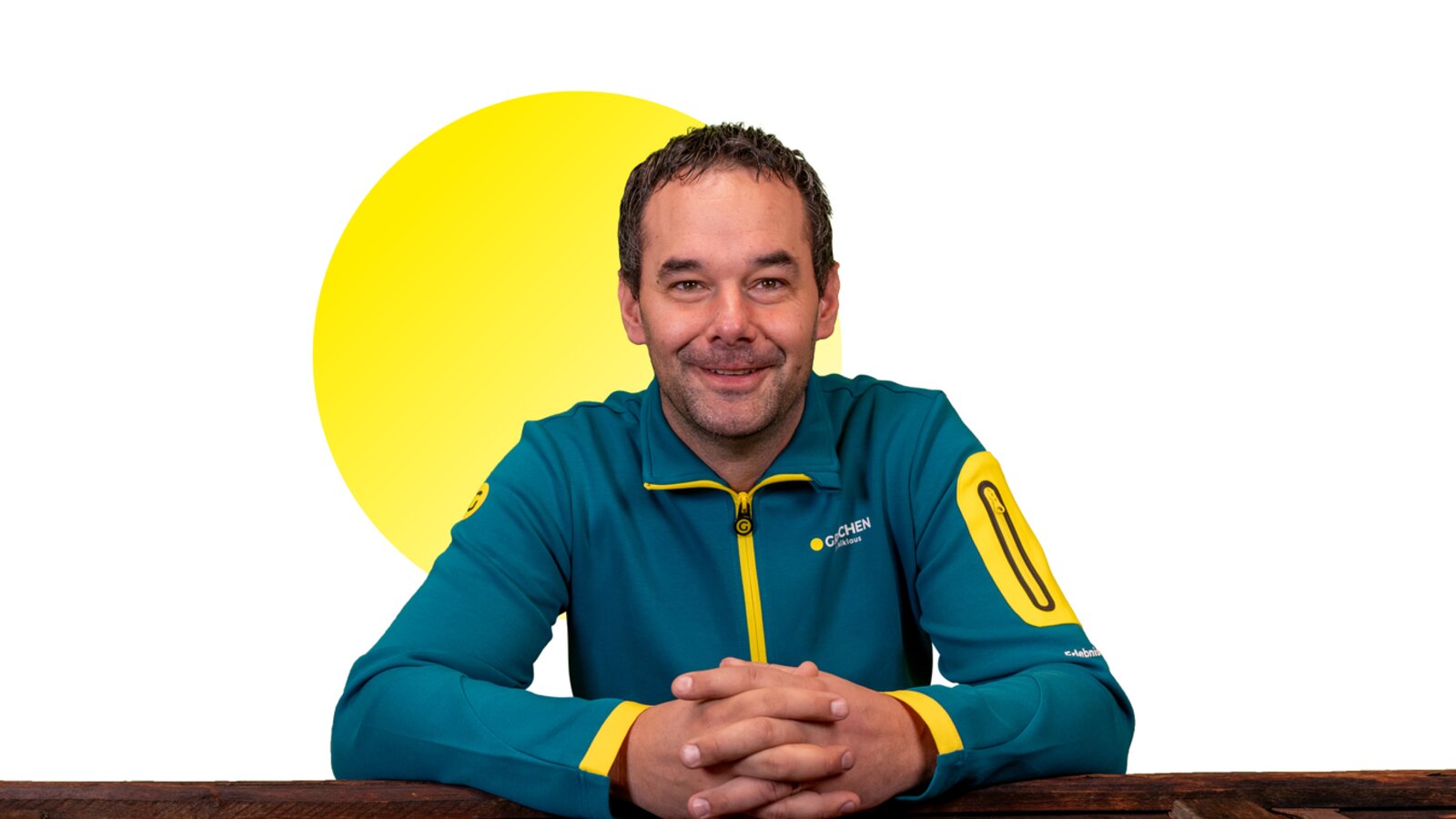
Manuel Hohl is the man responsible for all snowmaking in Grächen. As technical manager on the mountain, he is responsible for ensuring that the ski area is ready for the season opening on 13 December – and remains so until the end of the season in early April.
This is Manuel's second winter in this position. Previously, he was head of HR at TUG (Touristische Unternehmung Grächen). He worked in the office, handling payroll, employee appraisals and administration. Today, his workplace looks a little different: ‘I had to get used to the cold during my first winter,’ he laughs.
With no previous experience but a lot of manual skill, the Grächen native took on the vacant position on the mountain. ‘There is no apprenticeship, no school or training for this. The know-how is simply passed on.’ In his case, this meant above all ‘learning by doing’.
The difficult part? Understanding the connections. The system is complex and you have to work your way into it. Prioritising is the most important thing. Because snowmaking is an ongoing process. Hour by hour, new assessments are made and measures taken, as Manuel explains: ‘We are constantly acting, reacting and monitoring, and are completely dependent on external factors.’
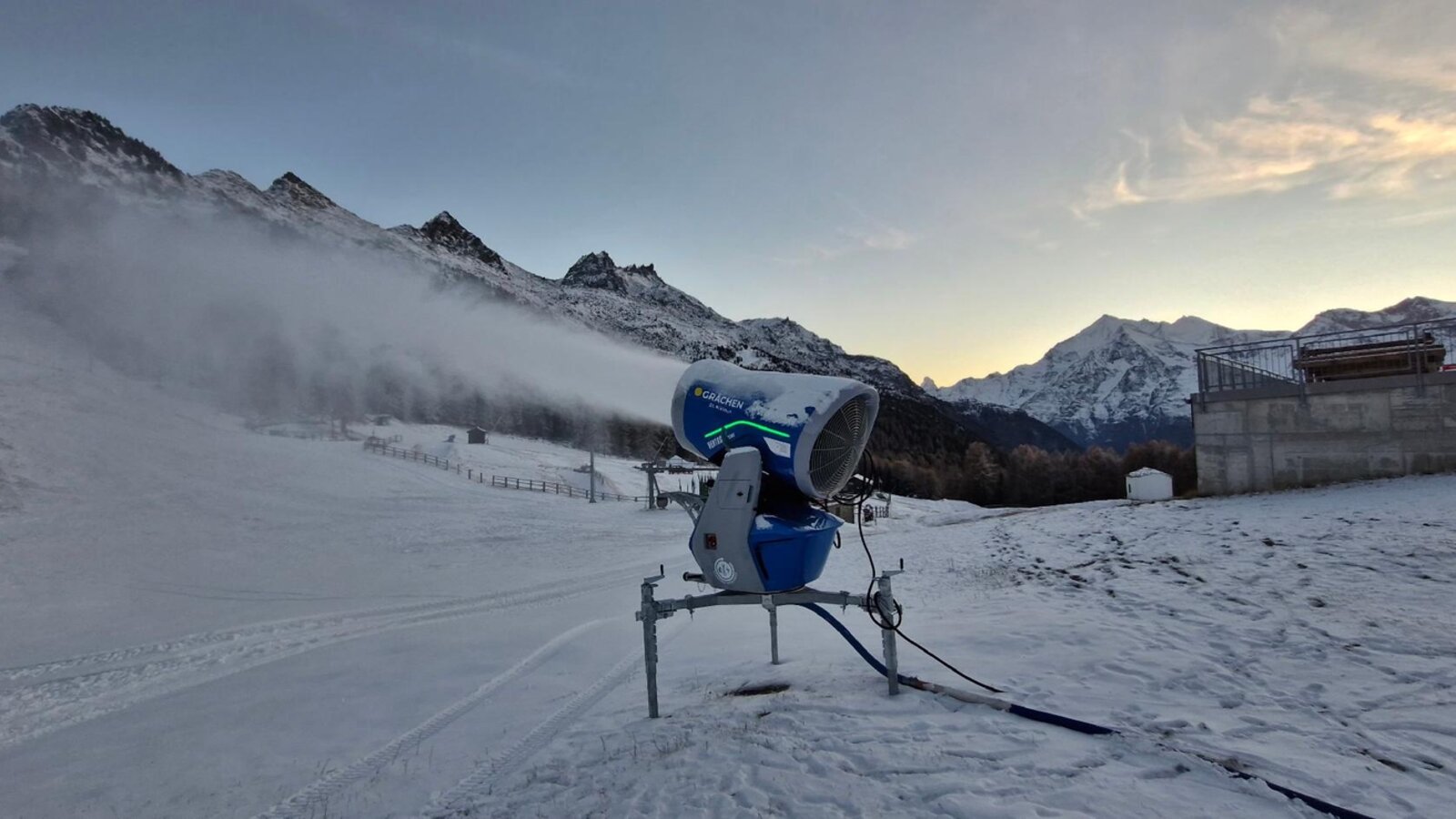
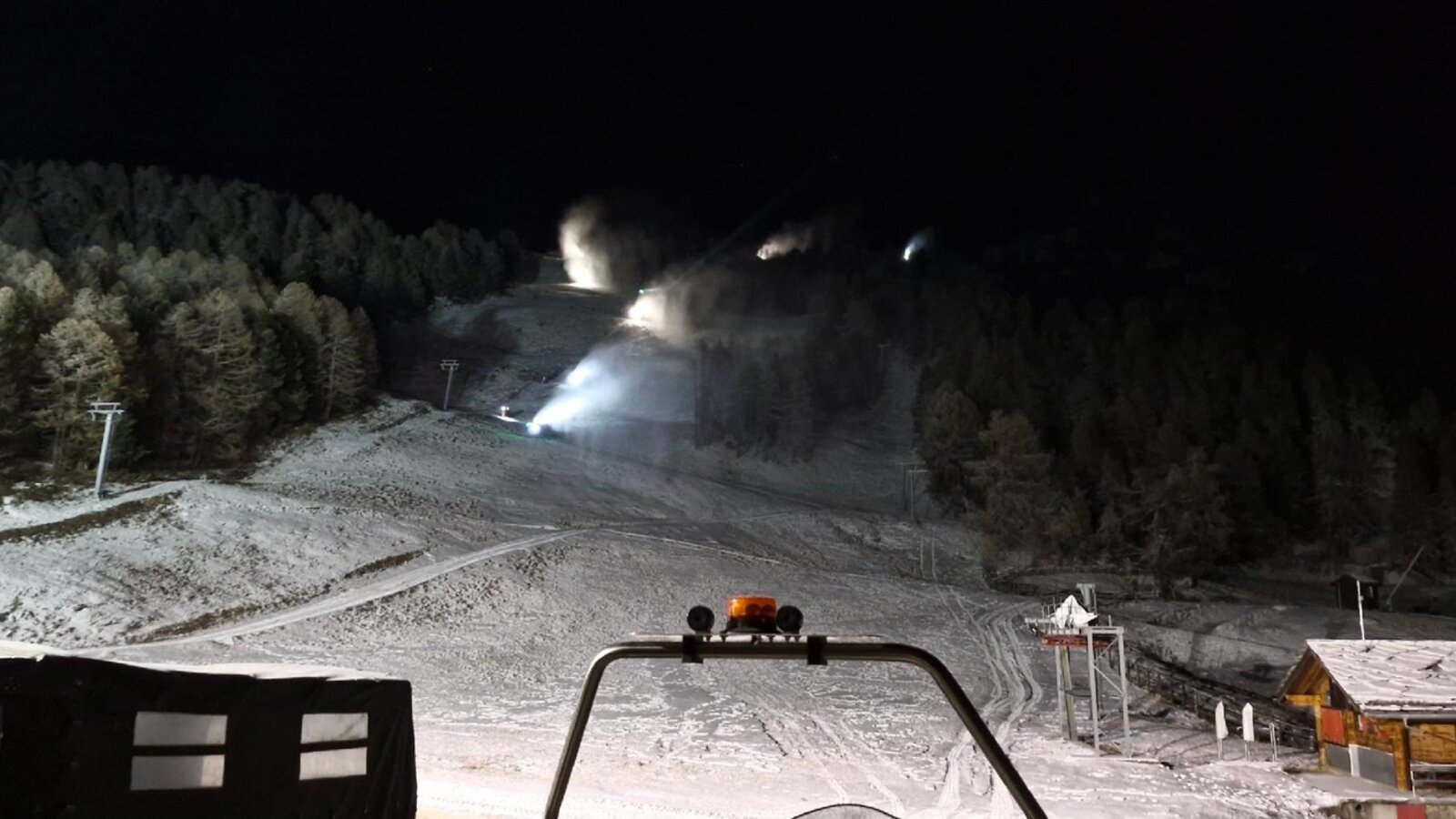
The snowmaking team currently consists of four people: two work during the day and the other two during the night. Manuel is on the day shift and sets off for the mountain at 7.30 a.m. During the briefing with the night shift, he reports on any positive and negative developments over the last few hours. He then checks the water level and how many cubic litres are being used where. The subsequent daily planning depends on the temperatures: ‘We check the temperature, wind and humidity. The next steps depend on this.’ That's why it's so important to be on the mountain yourself: ‘We can't determine the initial situation based on a weather app alone. We have to be on site to assess the situation.’
During the day, they also take care of any defects and shifts so that the night shift can work as unrestricted as possible. Sometimes the weather throws a spanner in the works: ‘Snow-covered and icy lances and snow cannons have already given us a few hours of extra work and frozen hands and feet,’ smiles Manuel.
Last week, the team benefited from perfect conditions. Temperatures were low enough for them to make snow all the way down to the valley floor. However, when it gets warmer again, snowmaking has to be moved back to the Seetal area. Constant changes of plan mean that flexibility is essential – as the snowmakers from Grächen confirm. And things don't always go according to plan: ‘Last week we had a sudden loss of water. The reason for this was a leak, which we first had to locate and then repair. Fortunately, the problem has now been fixed.’
31 snow cannons and 81 snow lances cover the slopes of Grächen with snow.
Around 150,000 cubic litres of water are available for this purpose throughout the winter season. The trick is to allocate this water sensibly. "We have defined a target for each slope. This is optimised from season to season. The less water used, the more electricity is saved. So far, around a quarter of the water has been used, but snow is also being produced 24 hours a day.
The exciting thing is that Grächen alone does not have enough water for this – especially when guests arrive. That is why water is also sourced from the Mattmark reservoir. However, the pumping stations have to bring the water up the mountain – so the amount of water is limited and has to be prioritised; there is no water stored on the mountain. This means that during peak snowmaking times, there are no reserves – everything that comes up is literally ‘powdered’ again.
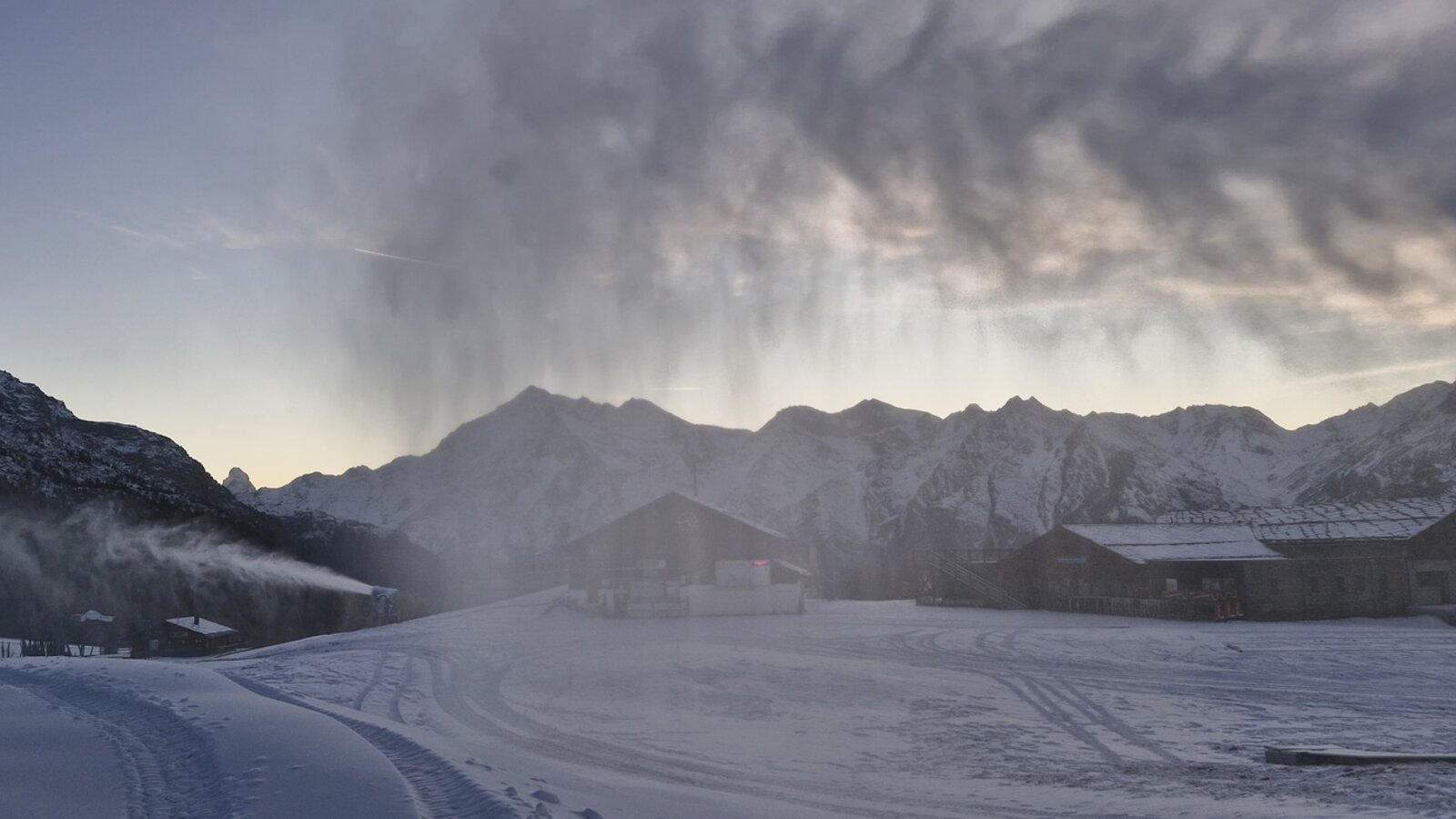
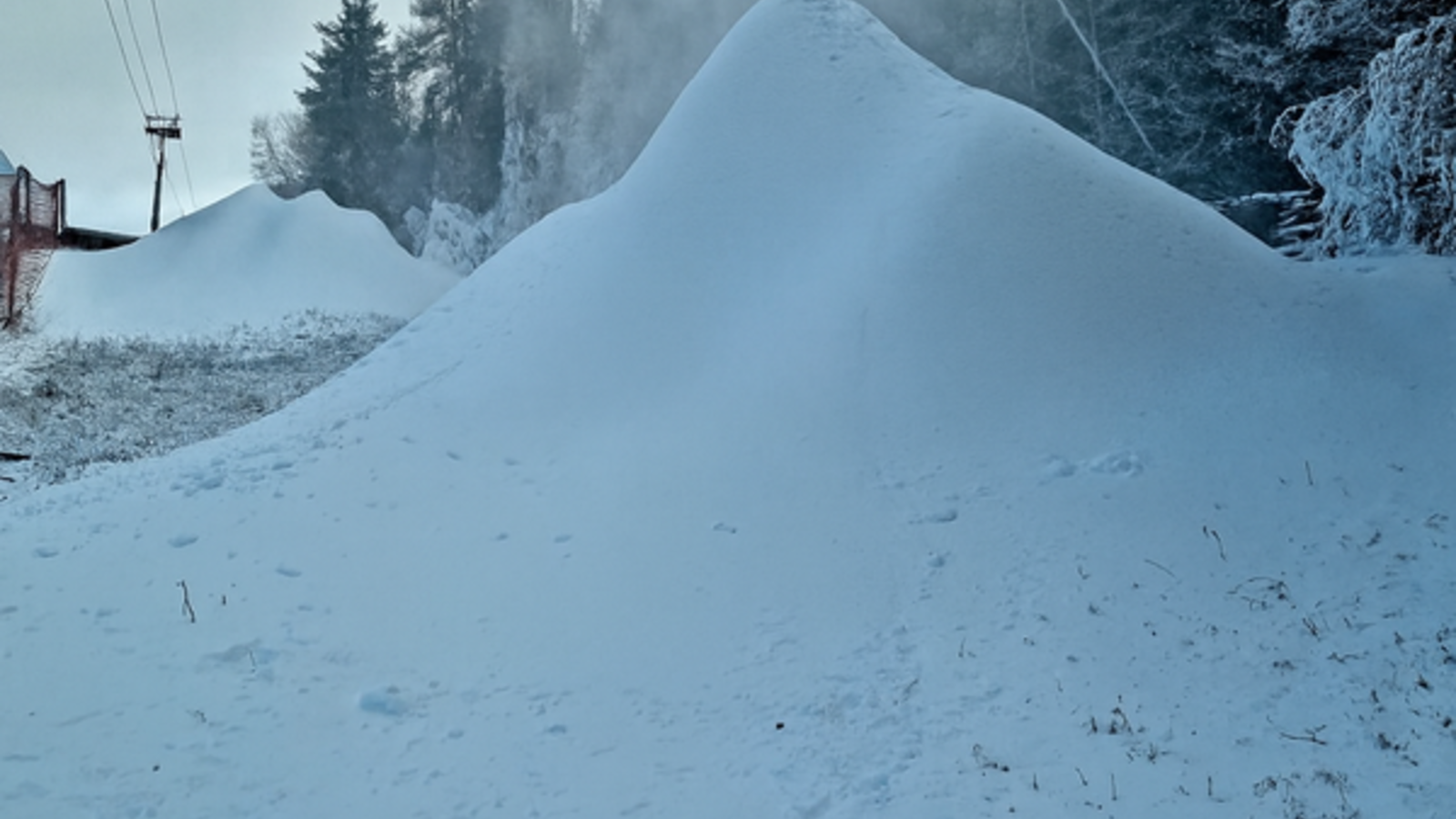
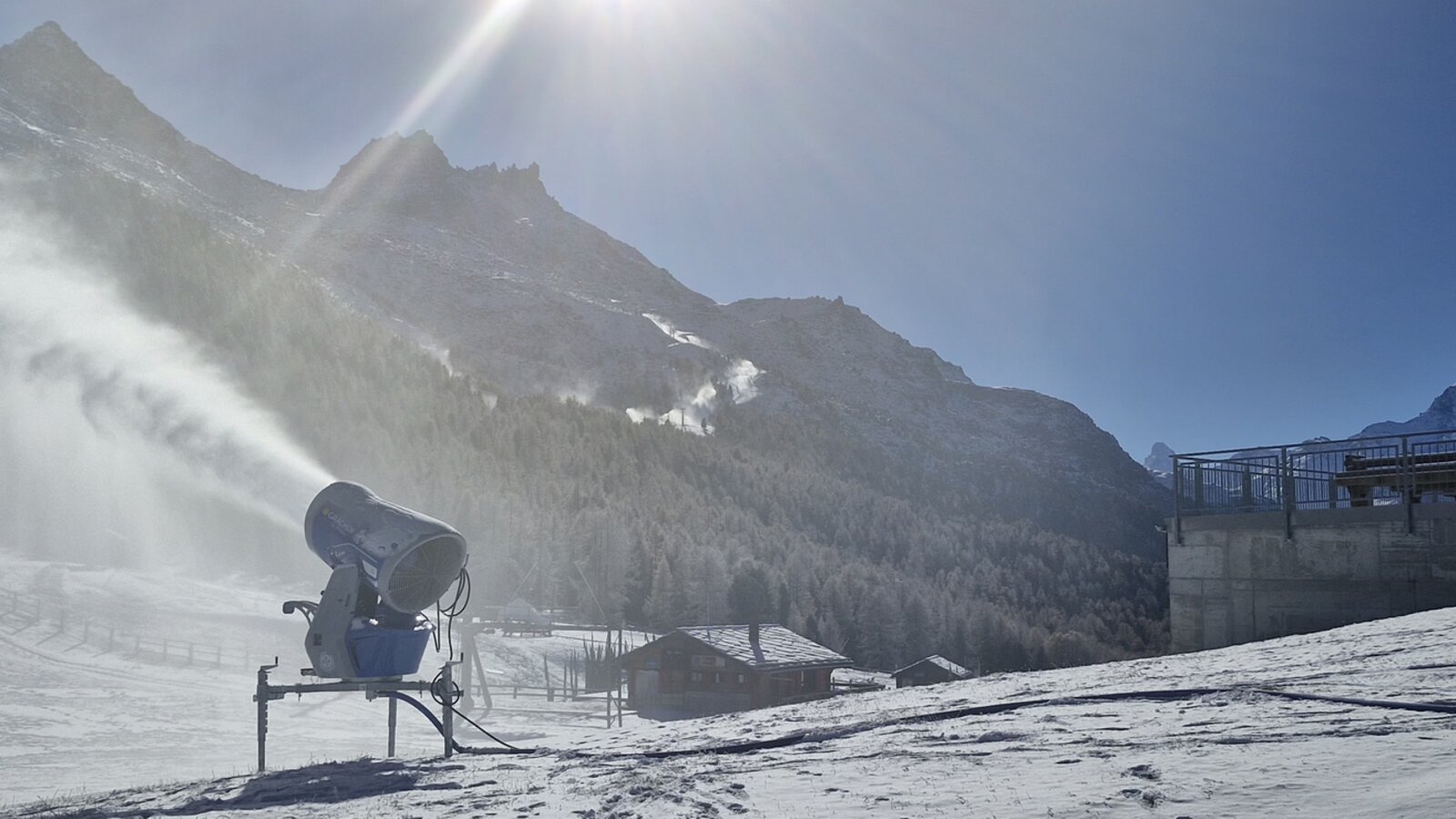
But how is snow actually made? ‘In theory,’ all you need is water, air and pressure. When these elements are mixed together and pressed through the nozzles, the water is atomised and crystallises as it falls to the ground. In practice, it's a little more complicated, because temperature alone is not enough to produce snow. The decisive factor is the wet bulb temperature – which is calculated from the temperature and humidity.
So not all snow is the same. The perfect white can only be achieved through the interaction of these components. The colder and drier it is, the better the snow settles. This can sometimes cause confusion. ‘Sometimes people ask me why we're not making snow when it's cold. Then it's my job to explain the process.’
Grächen is currently benefiting from excellent conditions, and last week's cold spell in particular has played into the crew's hands. Nevertheless, the days are long and intense: ‘It only works with teamwork. I know I can count on the support of my colleagues, and we all pull together.’
Although his family and hobbies such as the fire brigade are currently taking a back seat, Manuel also derives a lot of pleasure from his current work: ‘Being out in nature, enjoying the peace and quiet and the starry sky at night on the mountain and the incredible panorama during the day – that's something very special.’
Added to this is the praise from many people as soon as Grächen opens its slopes: ‘We enable people to have wonderful holidays. And even if you can't always see the effort that goes into it, the guests are satisfied and enjoy the slopes.’
He himself has been skiing with different eyes since he started this job: ‘Certainly more consciously and with more forbearance. It's the result of teamwork and lots of helping hands. From the drivers and snow groomer operators, the patrols who ensure safety on the slopes, and the entire team of electricians and mechanics in the workshop.’
Would you like to learn more about snowmaking and take a look at the control centre yourself?
Our new ‘Let It Snow Tour’ gives you a glimpse behind the scenes. You can find all the information here.


